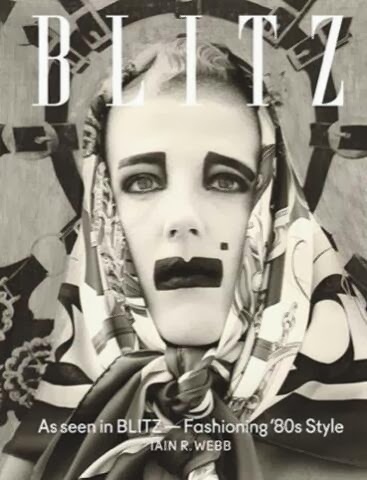
Many people know about it, some are Voguers themselves, others are already over it, but to many Voguing is still a relatively unfamiliar term. There are many an article written about it and I will try to point them out here.
First, how it all started? Where and when....
As any other underground movement/subculture, Voguing was born as an answer to socio-political pressures on a group of individuals. In this case particularly black and latin LGBT communities in Chicago and New York.
The correct term to use, we should point out, is actually Ballroom (or simply Ball) Scene. Voguing is the main style of this scene, but not the only one as we will see further on.
It is widely considered that Voguing dates back to late 70s and took its name from Vogue magazine, as the competing dancers would flip to pictures of models posing, and imitate them, trying to outdo each other in the process. This really refers to Voguing as a style and attitude, but many will argue that the true birth of the ballroom scene is to be traced back to the notorious culture of Harlem drag balls in 1920s and 1930s New York. (ref: http://www.wiretapmag.org/arts/43120 and http://thequietus.com/articles/07990-vogue-voguing-soul-jazz-chantal-regnault) and other claims even go further to suggest that the scene was born in Chicago as early as 1900s (ref: http://gapersblock.com/ac/2011/01/21/strike-a-pose-underground-gay-balls-chicago/ )
To define Ballroom, it is really a competition where different teams, called HOUSES perform against each other in various categories such as Fasion, Dance, Runway, Modelling, Face, Creativity and more. If the early balls were diverse, they were also very much white owned. This changed in the sixties, when Harlem's gay black community staged its own events. It wasn't until the following decade that the 'Houses' that supported the balls became formalized. In 1977 an imperious, elegant queen named Crystal LaBeija announced that a ball she'd helped put together was being given by the House of LaBeija, as in House of Chanel or House of Dior and the trend was formed. (ref: Michael Cunningham).
As the movement developed, it incorporated other forms of dance such as Waacking (high speed arm movements and hand gestures) and body popping. Largely an underground movement, it became relatively big trend by the end of the 80s when it suddenly experienced a mainstream breakout moment in the early '90s, when first Malcolm McLaren's 1989 release "Deep in Vogue" climbed the dance charts and then Madonna's take on "Vogue" became a blockbuster pop hit. Perhaps you've also heard of Masters at Work’s 1991 classic “The Ha Dance” which is one major source for sampling for most of the New Way voguing sound. Then we had Jennie Livingston's 1990 documentary "Paris is Burning" which is a great film, argues houseofdiabolique.com "but not one that does its subject justice. There is more to the ballroom scene than chopping, mopping, "fierceness" and shade; and there is more to voguing than striking a pose. As for Drag, it is a form of control. By looking good one can feel good. By looking powerful, one can feel powerful. One can be powerful. Therefore, beauty begets control.
 Today, ballroom culture and voguing has become an integral part of the black gay urban experience. Voguing culture has evolved. It's riding a new wave of exposure, through thousands of fan-posted YouTube videos, the massive viral reception that accompanied the five-member Vogue Evolution team's televised run on America's Best Dance Crew in 2009, and Willow Smith's "Whip My Hair" video, which features Leiomy of Vogue Evolution and centers on her signature "Leiomy Lolly" hair-whip dance move, also co-opted by Britney Spears and Beyonce. We've seen Kelly Rowland throwing shapes in more than one recent videos while the likes of Azealia Banks are coming up with soe sick beats - voguing style of cource. Lately, less formal groups of young voguers called kiki houses are springing up alongside the established houses. A more aggressive style of voguing has taken over, as "vogue fem" (or "vogue femme") continues to dominate the floor. Like most styles of dance, Vogue Fem is more about a look and feel than a hard-and-fast set of rules. It can encompass ultra-feminine, ballet-like "soft and cunty" movements on the one end, and hyperactive, stunt-driven "dramatics" on the other. Wild hair tosses, heart-stopping drops, and angled twirls became the vogue fem hallmarks. With the new style, dancers began to gravitate towards nervier, more anxious music with sharp orchestra hits, cascades of percussive crashes, and super-choppy samples. The gracefulness and glamorous poses of the Old Way [generally accepted division into Old Way (pre-1990) and New Way (post-1990)] made room for more attention-grabbing moves, and the amped-up speed garage sound of the new tracks wouldn't feel out of place on contemporary dance labels like Night Slugs or Fool's Gold."
But let's look back at the visual documentaries that turned the focus of the new generations to the legacy of Voguing and contributed to its revival of late. "Paris Is Burning" has introduced a wide audience to the language, style, music and culture of voguing. The 2005 documentary "How Do I Look" acts as a kind of riposte to Paris Is Burning, going further into ballroom culture and featuring some Paris Is Burning cast members who felt they weren't portrayed fairly. The main source for modern ballroom footage is unquestionably the YouTube channel Ballroom Throwbacks (recommended to us by Niall Connolly) , which has been grabbing and uploading candid footage of modern balls for a few years now. Also worth watching is The Luna Show, in which Butch Queen Face legend Luna Khan hosts some great short interviews with many stars of the ballroom scene.
 As far as reading goes, the main books dedicated to the scene are:
Voguing And The House Ballroom Scene Of New York City 1989-92 - an excellent coffee table book produced by Soul Jazz, this time on the House Ballroom scene of New York as documented by Chantal Regnault
Legendary: Inside the House Ballroom Scene - Gerard H. Gaskin's radiant colour and black-and-white photographs take us inside the culture of house balls. Comprised of photos taken at balls events in New York, Philadelphia, and Washington, D.C., is a collaboration between Gaskin, a camera-laden outsider who has been attending balls for twenty years
Sources and further read:
http://boingboing.net/2013/03/06/ballroom.html
http://www.xlr8r.com/features/2011/04/strictly-ballroom-after-decades-
http://www.houseofdiabolique.com/runway.htm (with free music download links)
http://www.redbullmusicacademy.com/magazine/vogue-ballroom-vivian-host
http://thequietus.com/articles/13812-vogue-ballroom-cultural-appropriation-niallist
http://www.wiretapmag.org/arts/43120
http://harlembespoke.blogspot.co.uk/2013/11/remember-vogueing-originated-in-harlem.html